
Living Income Before Sustainability: Why Sequencing Matters
In June, I attended the Living Wage & Living Income Summit in Rotterdam, hosted by IDH - the Sustainable Trade Initiative. The Summit brought together over 500 people from more than 300 organisations, including retailers, brands, processors, traders, producers, farmers, investors, and civil society, all wrestling with the same uncomfortable truth: despite years of corporate commitments, only a fraction of companies have made measurable progress on paying farmers and workers enough to live on. According to the World Benchmarking Alliance's most recent State of Play report, only 8 of the 350 companies it assessed, about 2%, scored anything at all on living income indicators. The other 342 companies scored zero.
Part of why progress is so slow is the sheer size and complexity of the landscape companies are trying to navigate. Organic certification, GlobalG.A.P. (a widely used farm assurance standard, its name short for Global Good Agricultural Practice), Fairtrade, and Rainforest Alliance are just a handful of names within it, where an independent auditor checks compliance and issues a certificate, often with a recognisable label. There are reportedly close to 450 such voluntary sustainability standards operating in agriculture globally today, covering everything from cocoa and coffee to palm oil and soy. Regenerative agriculture pilots sit alongside this landscape too, though most are a different kind of animal: usually run and verified by the buying company itself, or assessed against a shared framework, rather than certified by an independent body with a public label. But whether it's a formal certification or a company-led verification programme, the basic deal on offer to the farmer is the same: change how you farm, follow a stricter set of rules, and you'll eventually get a better price, a market premium, or a more resilient farm.
One of the Summit's breakout sessions I attended, called "Two Crises, One Strategy: At the Nexus of Living Income and Climate", zoomed in on regenerative agriculture. The session's premise was simple: farmer livelihoods and climate/nature outcomes are so tightly linked that you can't meaningfully improve one without the other. If regenerative agriculture is introduced before farmers are earning enough to live on, the resilience it's meant to build doesn't really take hold. The project ends up set up to fail, not because anyone intended that, but because the sequencing was wrong from the start.
One story shared at the Summit stuck with me. I want to share it here, because it's a case study in what happens when good intentions meet bad economics, and while the story itself is about regenerative agriculture, the pattern it reveals runs through the entire landscape of sustainability standards, not just this one.
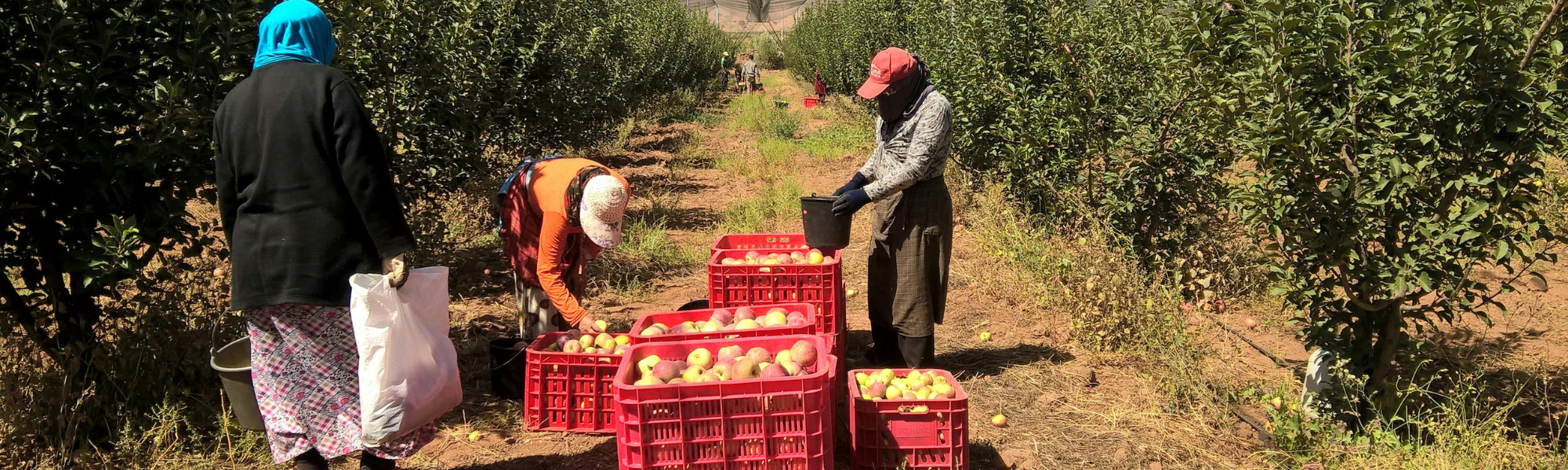
But first: What is regenerative agriculture, anyway?
Before getting into the story, it's worth being clear about what "regenerative agriculture" actually means, because the term gets used loosely. The Sustainable Agriculture Initiative (SAI) Platform (a non-profit founded by Danone, Nestlé and Unilever back in 2002, whose members now include most of the world's largest food and drink companies) describes it as an outcome-based farming approach that protects and improves soil health, biodiversity, climate and water resources while supporting farming business development. That last bit matters more than it might seem. Regenerative agriculture isn't just a set of practices (cover cropping, reduced tillage, composting, agroforestry, rotational grazing); it's supposed to be an approach that leaves the farm and the farmer better off than before. The trouble is that for a long time, "regenerative" has meant different things to different companies.
That's starting to change. In 2026, a wave of major food and drink companies, including Nestlé, Danone, Unilever and PepsiCo, among others, signed on to a common framework called "Regenerating Together," built by the SAI Platform after more than four years of collaboration, including pilot initiatives spanning 23 production systems and 25 countries. Separately, 40 of the world's leading food and agriculture companies signed a joint declaration in May 2026 to accelerate the adoption of regenerative agriculture across global supply chains.
At the farm level, individual companies are running their own programmes too. Danone, for instance, reports that 91% of its milk supply is now covered by farm-level assessment tools to monitor environmental practices and support the transition to regenerative agriculture, with 42% of key ingredients sourced from farms already engaged in regenerative practices. Unilever has set a target to help 250,000 smallholder farmers gain access to its livelihoods programmes and implement regenerative agriculture practices on a million hectares of agricultural land by 2030.
These are genuinely significant commitments. But they also mean that, right now, millions of smallholder farmers around the world are somewhere in the middle of a transition that's being defined and funded largely by the companies buying their produce, not by the farmers themselves. That's exactly the dynamic the story below exposes.
A story of farmers needing to feed their families
At the Summit, one speaker shared a story from the field that made this point land harder than any slide deck could: a farming community was hoping to earn a price premium by claiming their pineapples were organic, even though they weren't. When auditors went to the community to collect sample fruit for a routine compliance check, none of the farmers who were supposed to provide samples showed up. So the audit team went to the farms directly to collect the fruit themselves, and found the pineapples had been artificially ripened using calcium carbide, a practice completely at odds with the organic claim the farmers were making.
The fruit still passed the audit it was actually being tested against, on a technicality: the residue levels came back within the legal limit. But the deeper discovery was what it revealed about the farmers' organic claim; it had never been true.
When asked why, the farmers were blunt: they didn't have the money for fertiliser or other inputs, so their farms were effectively organic by default, not by design or intention. But being organic by default isn't the same as being able to afford the organic protocol. Following that protocol properly, they said, still wouldn't cover their costs, even accounting for the premium on offer. So when it came to getting produce off the farm and turning it into income for their families, they weren't going to let a compliance requirement get in the way of that. Feeding their families came first.

The lesson: sequencing matters
Regenerative and organic transitions ask farmers to change how they farm, often with real short-term costs. Whether that's forgoing yield-boosting inputs, investing in new practices, or simply accepting more risk while the soil and system rebuild. Those costs are supposed to be offset eventually by premiums, better yields, or improved resilience. But "eventually" doesn't feed a family this season.
When farmers are already living below a decent income, the transition isn't really optional. It becomes something to be managed around, worked past, or quietly ignored under pressure, exactly as happened with the carbide-ripened pineapples. The audit was technically passed, but nothing about the farmers' underlying economic reality had actually improved, and the organic ambitions attached to that project were, in practice, hollow from the start.
An audit can confirm whether something passes a test, it can't tell you what someone would say if you simply asked them. Direct engagement with farmers and workers exists precisely to catch what auditing can't: if the pineapple community had had a way to say, early and anonymously, that the organic protocol didn't cover their costs, that would have been worth knowing long before anyone found the carbide.
This is exactly the pattern that plays out across organic certification, GlobalG.A.P. compliance, and regenerative agriculture pilots alike and, as the numbers above suggest, across most of the other 450-odd sustainability standards out there too. Whether it's an organic protocol, a GlobalG.A.P. standard, or a regenerative practice, the underlying incentive is the same: comply now and hope for a reward later, or produce what puts food on the table tonight. When push comes to shove, farmers will choose the second option, not because they don't value sustainability, but because for them, survival isn't optional.
The point that this story illustrated is that sustainability standards and premiums can't be the primary mechanism for getting farmers to a living income. They can be part of the picture, but if a farmer's baseline income is still below what they need to survive, the incentive to prioritise short-term survival over long-term soil health will keep winning, no matter how well-designed the certification scheme is.
Ensuring the business case works for the farmer has to be the starting point, not an afterthought layered on top of a regenerative pilot.
What this means for the companies advancing regenerative agriculture
For the large food and beverage companies now racing to hit regenerative agriculture targets, the implication is uncomfortable but important: sequencing is not a minor implementation detail; it's the whole game.
If regenerative pilots are rolled out to farmer communities that haven't yet reached a living income, companies shouldn't be surprised when corners get cut, protocols get quietly bent, or projects that look successful on paper turn out to be built on a false foundation. The fix isn't more auditing because the audit in this story was carried out exactly as intended, and it still missed the real story until the team went and looked at the farms themselves. The fix is making sure farmers have a viable income before asking them to take on the extra risk and cost of transitioning how they farm.
Where the consumer fits in
That naturally raises the next question: who pays for that fix? Another speaker at the Summit, also drawing on years of field experience, made a point that's stayed with me: none of this gets solved by companies and farmers alone. A living income for a farmer and a viable business case for a company both ultimately trace back to what someone further down the chain is willing to pay. If the price on the shelf doesn't reflect the true cost of producing food responsibly, that gap has to land somewhere, and right now it usually lands on the farmer.
That's not a call for individual consumers to feel personally responsible for fixing global supply chains on their own; that would be an unfair weight to place on any one shopper. But it is a case for bringing consumers properly into the conversation, rather than treating them only as an audience for sustainability marketing. Practically, that can look like companies being transparent about where premiums actually go and whether they reach farmers, retailers building the true cost of living incomes into pricing rather than absorbing it quietly or passing it back upstream, and consumers who do have the means to choose certified or verified products treating that as one lever among several, alongside supporting policy and corporate accountability measures that push for structural change. The point raised at the Summit was less about any single action and more about the principle: every part of the chain, farmer, company, retailer, and consumer, has a role in the solution, and progress stalls when any one of them is left out of the conversation.
That's really what the pineapple story comes down to. A compliance box got ticked, but the real question, whether the people growing our food can actually afford to grow it responsibly, was never properly answered. Regenerative agriculture, and the hundreds of other sustainability standards sitting alongside it, can only work once that question gets asked and answered first. Get the sequencing right, and bring farmers, companies, retailers and consumers into that conversation honestly, and there's a real chance of building something that lasts. Skip it, and the cart just keeps ending up in front of the horse. Catching that gap early is the work worth doing — audits alone won't surface it.